English:
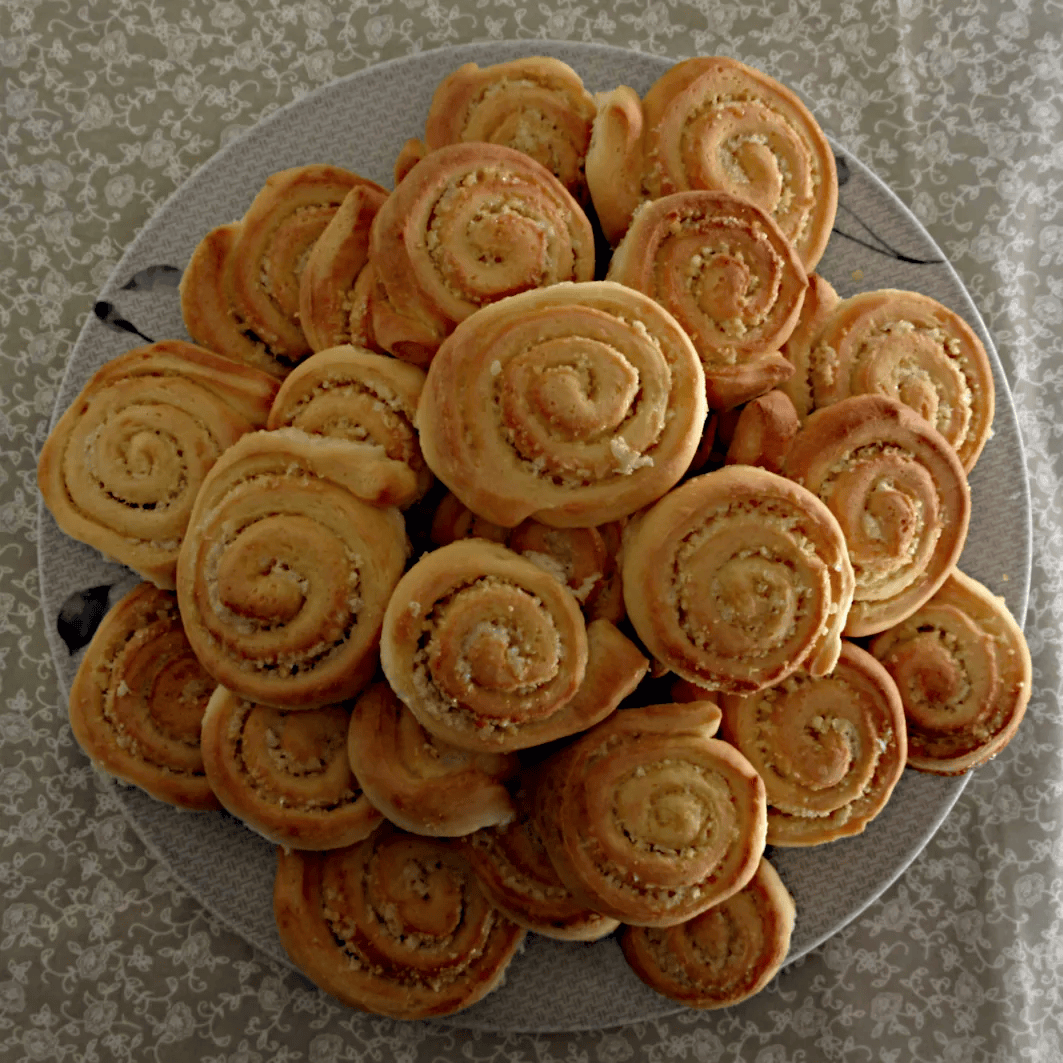
Limoncini—meaning "little lemons"—are traditional Italian sweet spiral rolls filled with fragrant lemon zest and sugar. Made with a tender yeast dough, these citrusy treats are rolled, sliced, and baked until lightly golden, making them a delightful accompaniment to tea or coffee.
Español (México):
Los Limoncini (que significa "limones pequeños") son panecillos dulces italianos enrollados en espiral, rellenos de ralladura de limón y azúcar. Elaborados con una masa fermentada suave, estos panecillos cítricos se rebanan y hornean hasta dorarse ligeramente, siendo ideales para acompañar el café o el té.
Ingredients
Directions
English:
Cut the butter into small pieces and allow it to soften at room temperature.
Dissolve the brewer's yeast in warm milk along with the softened butter.
Add sugar to the mixture and stir thoroughly.
Add the remaining dough ingredients (flour, eggs, and a pinch of salt) and knead for several minutes until a smooth, soft dough forms.
Cover the dough with a towel and let it rise in a warm spot for about 1 hour.
Meanwhile, finely grate the zest of the untreated lemons into a bowl.
Add the remaining sugar to the lemon zest, mix well, and set aside in a dry place.
Roll out the risen dough into 1 or 2 large rectangles, about 3 mm thick.
Evenly spread the lemon-sugar filling over the entire surface of the dough.
Roll up the dough tightly into log shapes.
Slice the logs into individual pinwheels approximately 1 cm thick.
Place the slices on a baking sheet lined with parchment paper.
Cover and allow to rise a second time for 1 hour.
Preheat the oven to 180°C (350°F).
Bake for about 20 minutes, checking after 10 minutes to ensure they do not overbrown. Serve warm or cooled.
Español (México):
Corta la mantequilla en cubos pequeños y deja que se suavice a temperatura ambiente.
Disuelve la levadura en la leche tibia junto con la mantequilla suave.
Agrega el azúcar a la mezcla y revuelve bien.
Añade el resto de los ingredientes para la masa (harina, huevos y una pizca de sal) y amasa durante unos minutos hasta obtener una masa suave y uniforme.
Cubre la masa y déjala reposar en un lugar cálido durante 1 hora.
Mientras tanto, ralla finamente la piel de los limones sin tratar.
Mezcla la ralladura de limón con el azúcar y reserva en un lugar seco.
Extiende la masa con un rodillo formando 1 o 2 rectángulos de unos 3 mm de grosor.
Distribuye el relleno de limón y azúcar uniformemente sobre toda la superficie de la masa.
Enrolla la masa firmemente formando cilindros.
Corta los cilindros en rebanadas de aproximadamente 1 cm de grosor.
Acomoda las espirales en una bandeja para hornear cubierta con papel encerado.
Deja fermentar por segunda vez durante 1 hora.
Precalienta el horno a 180°C.
Hornea durante unos 20 minutos, revisando a los 10 minutos para evitar que se doren en exceso. Sirve tibios o a temperatura ambiente.
Italian Limoncini Sweet Lemon Rolls
Serves: 20 People
Prepare Time: 180
Cooking Time: 20
Calories: 180
Difficulty:
Medium
English:
Limoncini—meaning "little lemons"—are traditional Italian sweet spiral rolls filled with fragrant lemon zest and sugar. Made with a tender yeast dough, these citrusy treats are rolled, sliced, and baked until lightly golden, making them a delightful accompaniment to tea or coffee.
Español (México):
Los Limoncini (que significa "limones pequeños") son panecillos dulces italianos enrollados en espiral, rellenos de ralladura de limón y azúcar. Elaborados con una masa fermentada suave, estos panecillos cítricos se rebanan y hornean hasta dorarse ligeramente, siendo ideales para acompañar el café o el té.
Ingredients
Directions
English:
Cut the butter into small pieces and allow it to soften at room temperature.
Dissolve the brewer's yeast in warm milk along with the softened butter.
Add sugar to the mixture and stir thoroughly.
Add the remaining dough ingredients (flour, eggs, and a pinch of salt) and knead for several minutes until a smooth, soft dough forms.
Cover the dough with a towel and let it rise in a warm spot for about 1 hour.
Meanwhile, finely grate the zest of the untreated lemons into a bowl.
Add the remaining sugar to the lemon zest, mix well, and set aside in a dry place.
Roll out the risen dough into 1 or 2 large rectangles, about 3 mm thick.
Evenly spread the lemon-sugar filling over the entire surface of the dough.
Roll up the dough tightly into log shapes.
Slice the logs into individual pinwheels approximately 1 cm thick.
Place the slices on a baking sheet lined with parchment paper.
Cover and allow to rise a second time for 1 hour.
Preheat the oven to 180°C (350°F).
Bake for about 20 minutes, checking after 10 minutes to ensure they do not overbrown. Serve warm or cooled.
Español (México):
Corta la mantequilla en cubos pequeños y deja que se suavice a temperatura ambiente.
Disuelve la levadura en la leche tibia junto con la mantequilla suave.
Agrega el azúcar a la mezcla y revuelve bien.
Añade el resto de los ingredientes para la masa (harina, huevos y una pizca de sal) y amasa durante unos minutos hasta obtener una masa suave y uniforme.
Cubre la masa y déjala reposar en un lugar cálido durante 1 hora.
Mientras tanto, ralla finamente la piel de los limones sin tratar.
Mezcla la ralladura de limón con el azúcar y reserva en un lugar seco.
Extiende la masa con un rodillo formando 1 o 2 rectángulos de unos 3 mm de grosor.
Distribuye el relleno de limón y azúcar uniformemente sobre toda la superficie de la masa.
Enrolla la masa firmemente formando cilindros.
Corta los cilindros en rebanadas de aproximadamente 1 cm de grosor.
Acomoda las espirales en una bandeja para hornear cubierta con papel encerado.
Deja fermentar por segunda vez durante 1 hora.
Precalienta el horno a 180°C.
Hornea durante unos 20 minutos, revisando a los 10 minutos para evitar que se doren en exceso. Sirve tibios o a temperatura ambiente.
These terms and conditions contain rules about posting comments. By submitting a comment, you agree with these rules:
Although the administrator will attempt to moderate comments, not all comments can be moderated at all times.
You acknowledge that all comments express the opinions of the original author and not those of the administrator.
You will not post material which is knowingly false, obscene, hateful, threatening, harassing or invasive of privacy.
The administrator has the right to edit, move or remove any comment for any reason and without notice.
Failure to comply with these rules may result in being banned from submitting further comments.
These terms and conditions are subject to change at any time and without notice.
{"commentics_url":"\/\/muchogustorecipes.com\/comments\/","page_id":5,"required_email":true,"enabled_country":false,"country_id":0,"enabled_state":false,"state_id":0,"enabled_upload":true,"maximum_upload_amount":3,"maximum_upload_size":5,"maximum_upload_total":5,"captcha":true,"captcha_url":"https:\/\/muchogustorecipes.com\/comments\/frontend\/index.php?route=main\/form\/captcha&page_id=5","cmtx_wait_for_comment":"cmtx_wait_for_comment","lang_error_file_num":"A maximum of %d files are allowed to be uploaded","lang_error_file_size":"Please upload files no bigger than %.1f MB in size","lang_error_file_total":"The total size of all files must be less than %.1f MB","lang_error_file_type":"Only image file types are allowed to be uploaded","lang_text_loading":"Loading ..","lang_placeholder_country":"Country","lang_placeholder_state":"State","lang_text_country_first":"Please select a country first","lang_button_submit":"Add Comment","lang_button_preview":"Preview","lang_button_remove":"Remove","lang_button_processing":"Please Wait.."}
"Mucho gusto" is a popular Spanish greeting that translates to "Nice to meet you"—or, more literally, "Much pleasure." Speaking of which, I hope these recipes bring you much pleasure!




Comments